Travel calendar
Best time for a pilgrimage in India
India's sacred sites follow three calendars at once: mountain seasons, the weather on the plains, and festivals that move with the moon. Here's how to time your trip.
Seasons at a glance
Himalayan shrines
May–June & mid-Sept–Oct
Kedarnath, Badrinath, Gangotri and Yamunotri typically open around Akshaya Tritiya (April/May) and close around Diwali. Monsoon (July–August) brings landslide risk, so we avoid it. Kailash Mansarovar runs June–September.
North Indian plains
October–March
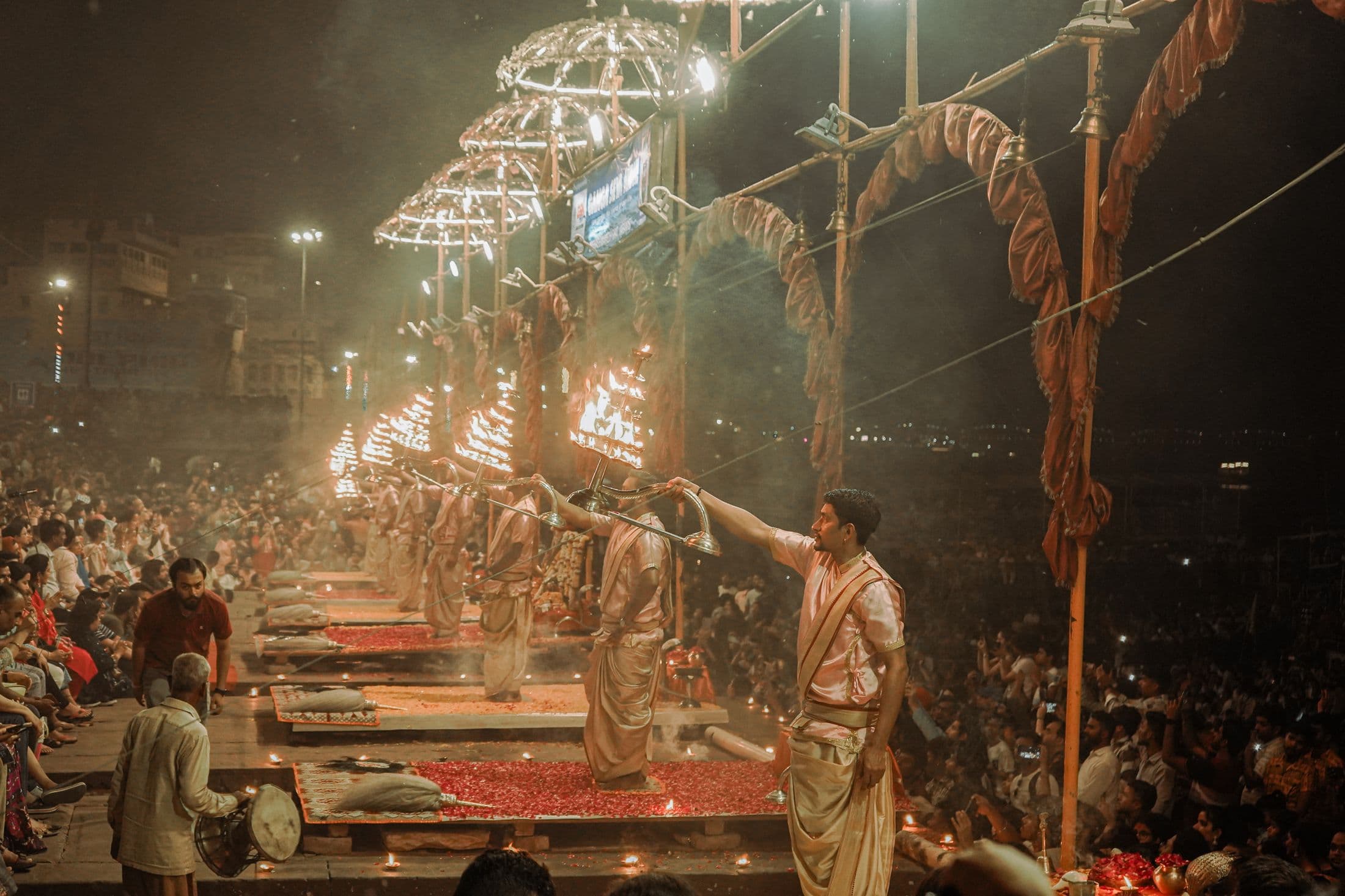
Varanasi, Prayagraj, Ayodhya, Mathura–Vrindavan and the Buddhist sites are most comfortable in winter. December–January mornings can be foggy; April–June is very hot.
South India
October–March
Temple towns in Tamil Nadu and Kerala are pleasant through winter. The northeast monsoon brings rain to the Tamil coast in October–December, usually in short bursts.
Month-by-month pilgrimage calendar
Festival timings are typical — they move each year with the lunar calendar. We confirm exact dates when you book.
| Month | Weather (plains) | Highlight | Where to go |
|---|---|---|---|
| January | Cold | Magh Mela, Prayagraj | |
| February | Pleasant | Maha Shivratri (Feb/Mar) | |
| March | Pleasant | Holi in Vrindavan & Barsana | |
| April | Warm | Baisakhi, Amritsar | |
| May | Warm | Char Dham opens (Akshaya Tritiya) | |
| June | Hot | Kailash season begins | |
| July | Monsoon | Amarnath Yatra | |
| August | Monsoon | Janmashtami, Mathura | |
| September | Pleasant | Autumn Char Dham window | |
| October | Pleasant | Navratri, Vaishno Devi | |
| November | Pleasant | Dev Deepawali, Varanasi | |
| December | Cold | Peak season in the South |
Planning a pilgrimage for your family?
Share your dates and who’s travelling. A travel planner will send a day-by-day itinerary and an all-inclusive quote within 24 hours — no obligation.