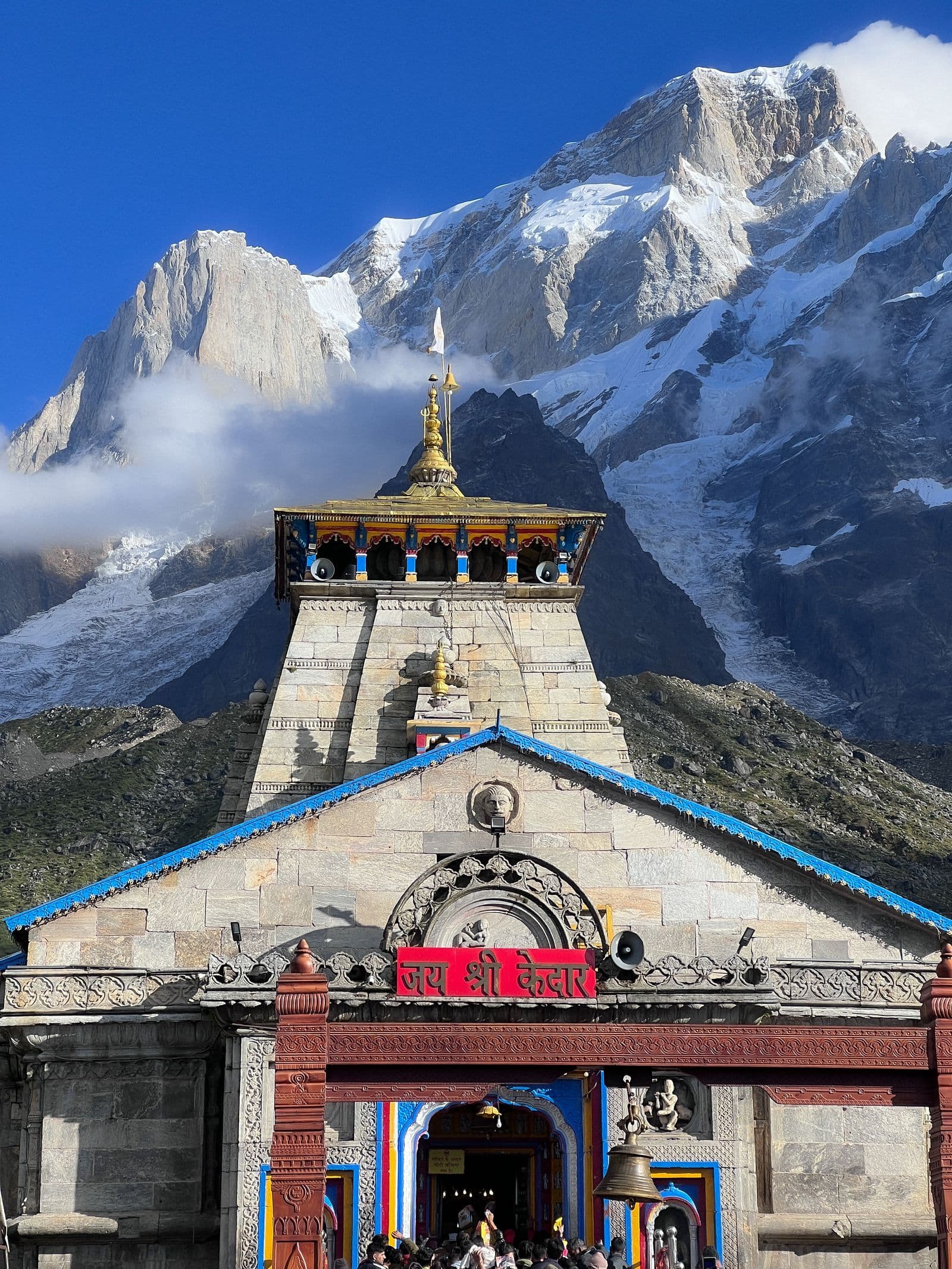
Kedarnath is the most visited of the Himalayan shrines and the hardest to reach. The temple stands at about 3,580 m at the head of the Mandakini valley. The last stretch is a trek of around 16–18 km from Gaurikund, or a short helicopter flight.
This guide covers what you need to plan a 2027 visit: when the temple is open, how registration works, the trek stage by stage, helicopter booking, altitude and what to pack.
Opening dates, registration rules and helicopter booking are set each year by the Uttarakhand government and the temple committee. We update this guide when the 2027 dates are announced, but always confirm with the official announcements before you book.
When is Kedarnath open in 2027?
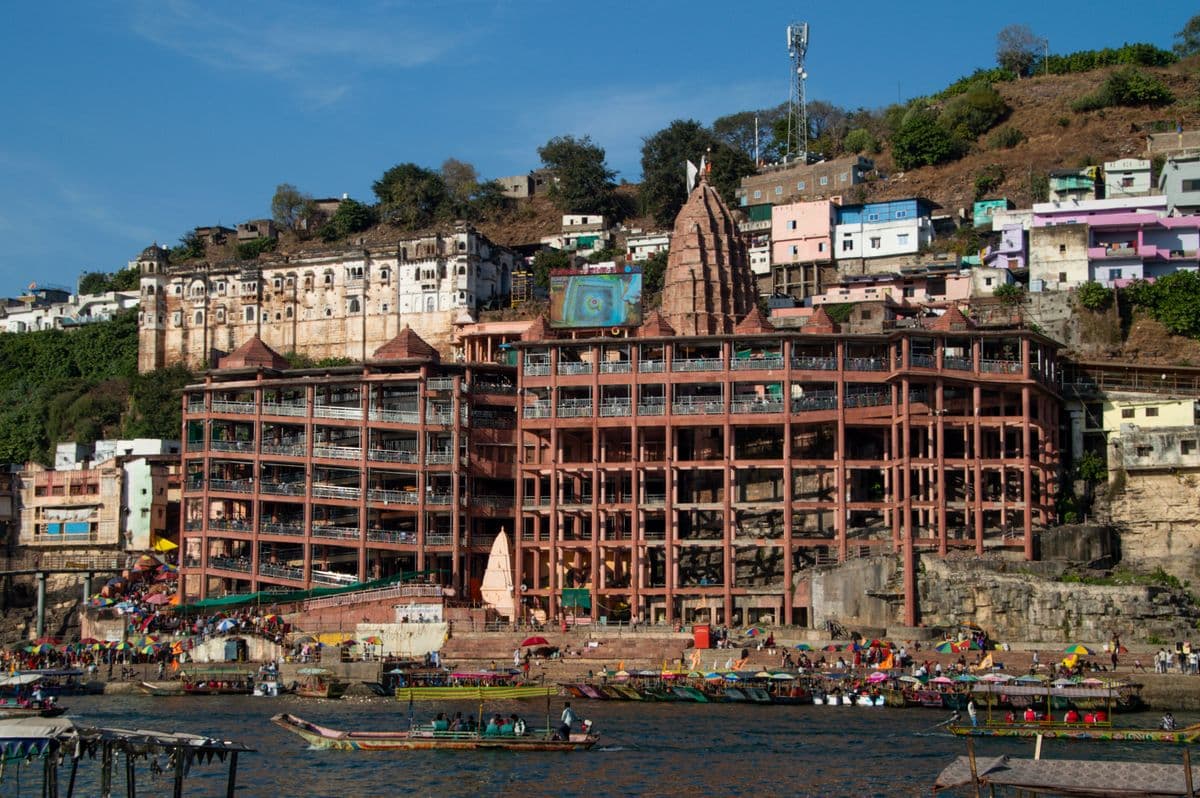
The temple opens in late April or May and closes on Bhai Dooj, two days after Diwali, which usually falls in late October or early November. The exact opening date is announced each year on Maha Shivratri. In winter the deity is carried down to the Omkareshwar temple at Ukhimath, and worship continues there until the shrine reopens.
| Months | Conditions | Verdict |
|---|---|---|
| May–June | Clear mornings, peak crowds, snow at the top early in the season | Busy but reliable |
| July–August | Monsoon: landslides, road closures and grounded helicopters | Avoid if you can |
| September–October | Clear skies after the rains, fewer people, cold nights | The best window for most travellers |
| Late October to closing | Very cold and services winding down | Short trips only |
For the full picture of seasons across India, see our pilgrimage calendar.
Registration: what you need
Every pilgrim to the Char Dham must register with the Uttarakhand government, including those visiting Kedarnath alone. Registration is free. It is done online through the state's official yatra registration website or app, and there are offline counters in Haridwar, Rishikesh and along the route for those who can't register online.
- Each person needs a separate registration linked to a photo ID: Aadhaar for Indian citizens, a passport for foreign nationals.
- You choose a date for each dham. Registrations are checked at points along the route.
- Keep the registration letter or QR code on your phone and carry a printed copy, because mobile signal is patchy above Sonprayag.
- Registration is free, so any website charging a fee to register you is not official.
Getting to Gaurikund
Most journeys start at Haridwar or Rishikesh. The road climbs through Devprayag, Rudraprayag and Guptkashi to Sonprayag, about 210 km from Rishikesh, which is a full day's drive on mountain roads. Private vehicles stop at Sonprayag, and shared jeeps carry pilgrims the last 5 km or so to Gaurikund, where the trek begins.
The nearest airport is Jolly Grant in Dehradun, and the nearest railway stations are Rishikesh and Haridwar. Most travellers spend the night in Guptkashi, Sitapur or Sonprayag so they can start walking at dawn.
The trek from Gaurikund, stage by stage
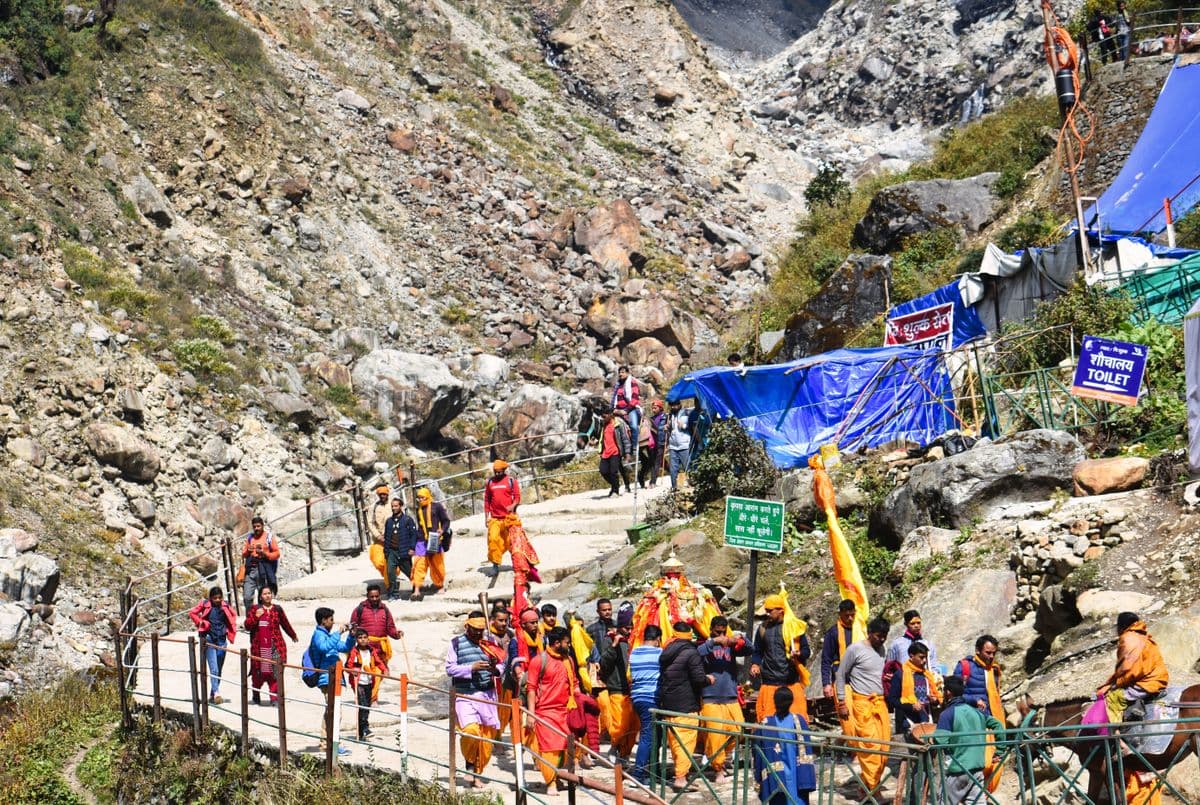
The path was rebuilt after the 2013 floods. It is paved and well marked, and it climbs steadily along the Mandakini. Fit walkers take 6–8 hours to go up and 4–6 hours to come down. Allow more time if you're older or not used to altitude. Distances below are approximate.
- Gaurikund (about 1,980 m): the trailhead, with a hot spring and the prepaid counters for ponies and palkis.
- Jungle Chatti (about 4 km) and Bheembali (about 7 km): tea stalls, rest shelters and medical posts.
- Linchauli (about 11 km): the valley opens out, the climb gets steeper and the temperature drops noticeably.
- Kedarnath base and the temple (about 16–18 km): the last stretch is gentle, ending with a walk up the main street to the temple.
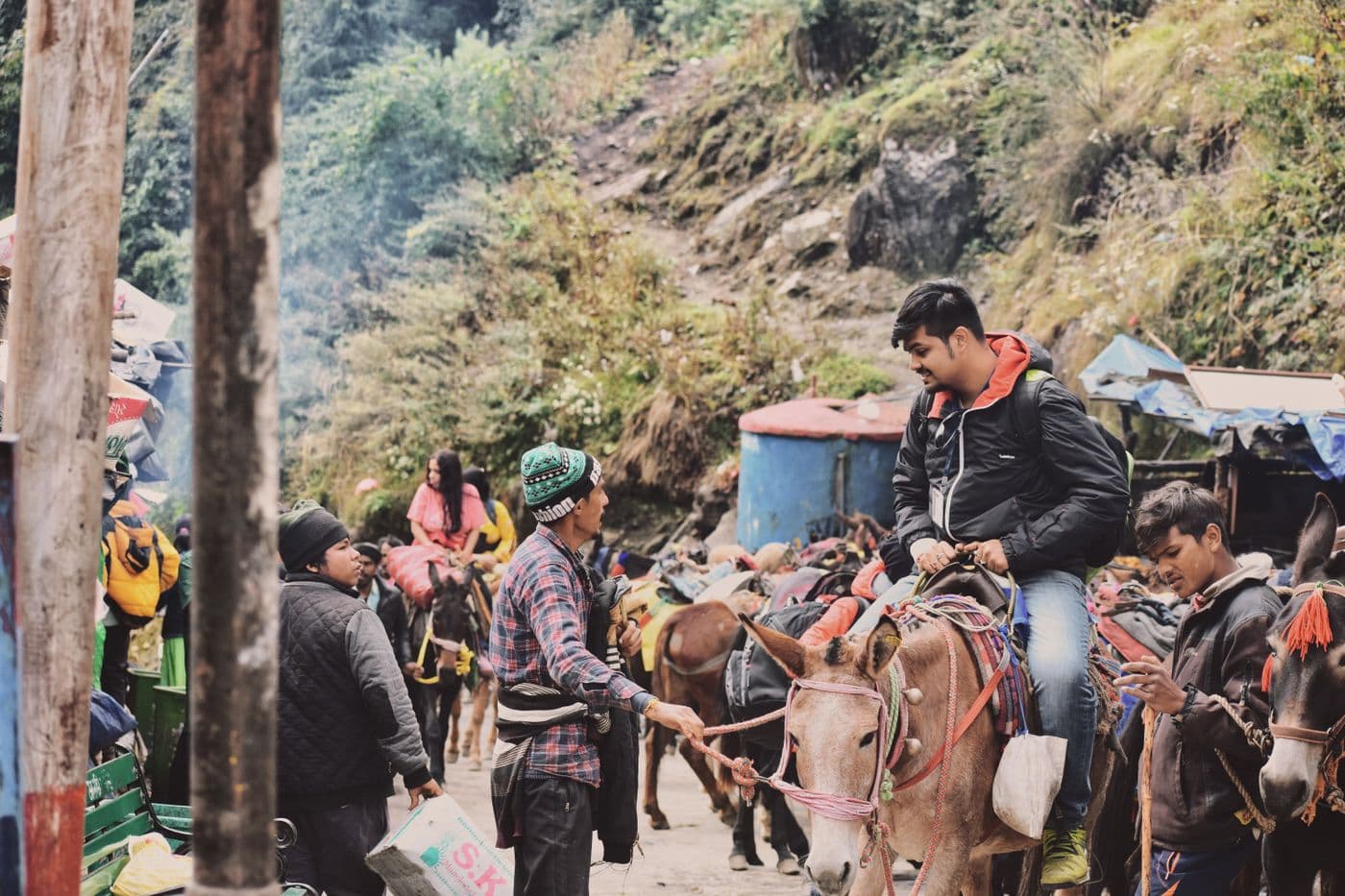
Ponies and palkis (chairs carried by bearers) work the whole route. Pithus, porters who carry a person in a basket on their back, take children and some elderly pilgrims. Book only at the official counters in Gaurikund, where the rates are fixed, and agree everything there rather than on the path.
Kedarnath helicopter: how booking works
Helicopters fly from helipads in the Phata, Sersi and Guptkashi area to a helipad near the temple. The flight takes only a few minutes. Seats are sold through the official IRCTC HeliYatra website, in batches released before and during the season. They sell out fast, and you need your yatra registration to book, so register first.
- Book only on the official website. Fake helicopter-booking sites and social media ads are a well-known scam every season.
- Flights depend on the weather. Morning slots are the most reliable, and a buffer day in your plan helps.
- Baggage is restricted, so carry only a small daypack.
- Arriving by air takes you from about 1,500 m to 3,580 m in minutes. Rest before you walk up to the temple.
In good weather a return helicopter makes Kedarnath possible as a day trip. Staying overnight is worth it, though, for the evening aarti and the quiet of the early morning.
Darshan, aarti and staying overnight
The temple opens before dawn, and the first hours of the morning are usually the calmest. In May and June, queues can stretch for hours by mid-morning. Special pujas can be booked in advance through the temple committee's official website.
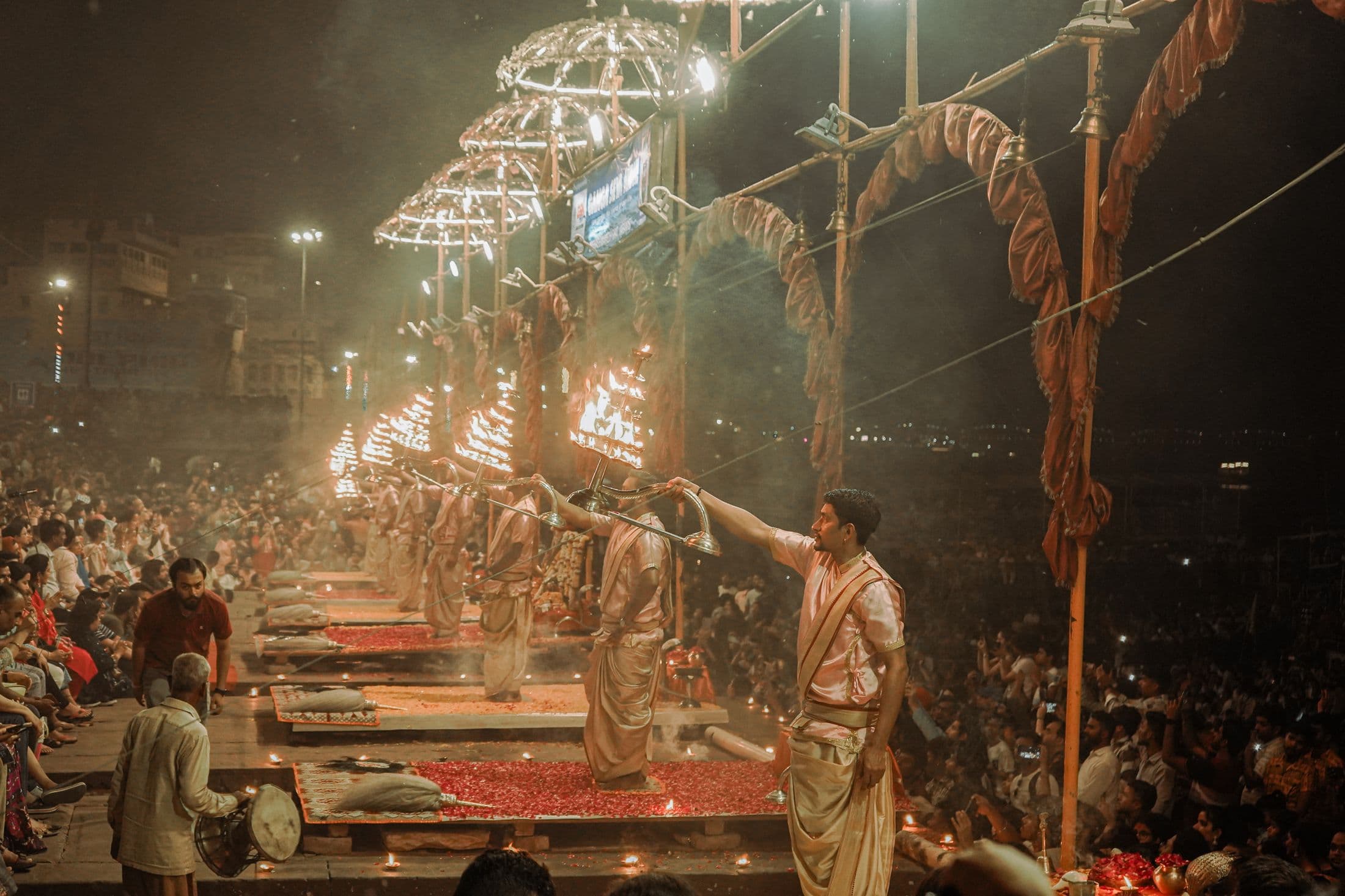
A night at Kedarnath lets you see the evening aarti, the temple lit up against the mountains and the first light on the peaks. Accommodation ranges from GMVN rest houses to tents and simple lodges. It is basic and cold, and it books out early, so reserve as soon as your dates are fixed.
Worth seeing nearby
- Bhairavnath temple, a short, steep climb above the town with the best view of the main temple.
- Adi Shankaracharya's samadhi, just behind the main temple.
- Chorabari Tal (Gandhi Sarovar), a glacial lake about 3 km beyond the temple, for walkers who are already acclimatised.
Altitude and health
Kedarnath is high enough for altitude sickness to be a real risk, especially if you drive up from the plains in two days and trek straight to the top. Warning signs include headache, nausea, breathlessness at rest and unusual tiredness. If symptoms get worse, go down.
- Get a medical check-up before the trip if you're over 50 or have heart, lung or blood-pressure conditions.
- Drink plenty of water, eat light meals and avoid alcohol.
- Walk at a pace at which you can still hold a conversation.
- Use the medical relief posts along the route if you feel unwell. They are there for exactly that.
Travelling with parents? Read our Char Dham guide for senior citizens.
What to pack
- Warm layers, including a down or padded jacket, even in June.
- A rain jacket or poncho, because weather changes quickly in the valley.
- Broken-in walking shoes with good grip.
- A small torch or headlamp for early starts.
- Photo ID, your yatra registration and enough cash, because ATMs are unreliable beyond Guptkashi.
- A water bottle, energy snacks, ORS sachets and your personal medicines.
- Sunscreen, sunglasses and a power bank.
Combining Kedarnath with other shrines
Most travellers pair Kedarnath with Badrinath on our six-day Kedarnath & Badrinath (Do Dham) tour, or visit all four shrines on the Char Dham Yatra. Kedarnath is also one of the twelve Jyotirlingas. Our 12 Jyotirlinga route planner shows how to fit it into that circuit.
Frequently asked questions
How long is the Kedarnath trek?
Around 16–18 km each way from Gaurikund on the route rebuilt after 2013. Most people take 6–8 hours to walk up and 4–6 hours to walk down.
Can I do Kedarnath in one day?
By helicopter in good weather, yes. On foot it is possible for very fit trekkers, but most people stay a night at Kedarnath or come back down to Gaurikund the next day.
Is registration required if I'm only visiting Kedarnath?
Yes. Registration with the Uttarakhand government is mandatory for each of the Char Dham, including a visit to a single shrine. It is free.
When will Kedarnath open in 2027?
The opening date is announced on Maha Shivratri. The temple traditionally opens in late April or May, and we update this guide once the date is confirmed.