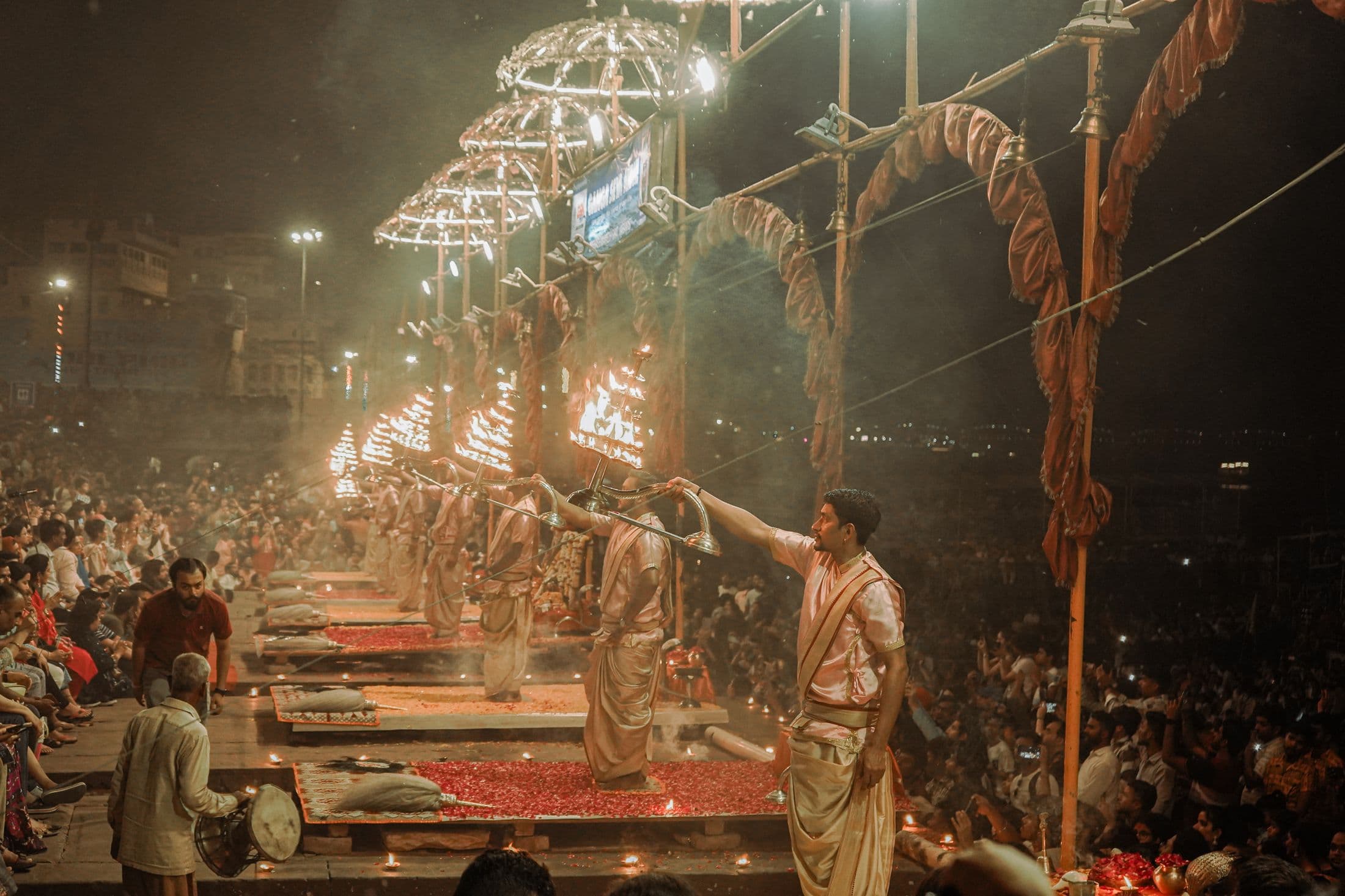
Every evening at sunset, priests on Dashashwamedh Ghat raise brass lamps to the Ganga in a choreographed ritual of fire, conch shells, bells and chanting. The Ganga Aarti is the most memorable sight in Varanasi, and with a little planning you can enjoy it without fighting the crowd.
This guide compares the evening aarti at Dashashwamedh with the dawn aarti at Assi Ghat, and explains when to arrive, where to sit and when a boat is worth it.
What happens at the Ganga Aarti
A row of young priests in matching robes stands on raised platforms facing the river. Over about 45 minutes they offer the aarti in sequence: incense, then large tiered brass lamps, then yak-tail whisks and peacock-feather fans, while bells ring and chants carry across the water. At the end, many people float a small leaf boat of flowers with a lit diya on the river.
Dashashwamedh or Assi Ghat?
| Dashashwamedh (evening) | Assi Ghat (morning) | |
|---|---|---|
| When | Around sunset, every evening | Before sunrise, every morning |
| Atmosphere | Grand, crowded and theatrical | Quieter, with music and yoga |
| Crowds | Thousands, especially on weekends and festivals | Hundreds |
| Best seen from | A boat or the ghat steps | The ghat steps |
Assi Ghat's morning programme, known as Subah-e-Banaras, combines the aarti with classical music and yoga. It's a gentle way to start the day, and it's at the southern end of the ghats, so a sunrise boat ride can begin there.
Timings and when to arrive
The evening aarti begins around sunset: roughly 6:30–7 p.m. in summer and 5:30–6 p.m. in winter. It lasts about 45 minutes. Timings shift through the year, so check locally on the day.
Arrive at least an hour early for a place on the ghat steps, and earlier on weekends, Mondays in the month of Shravan and festival days. The roads around Godowlia crossing close to vehicles in the evening, so plan to walk the last stretch.
Watching from a boat
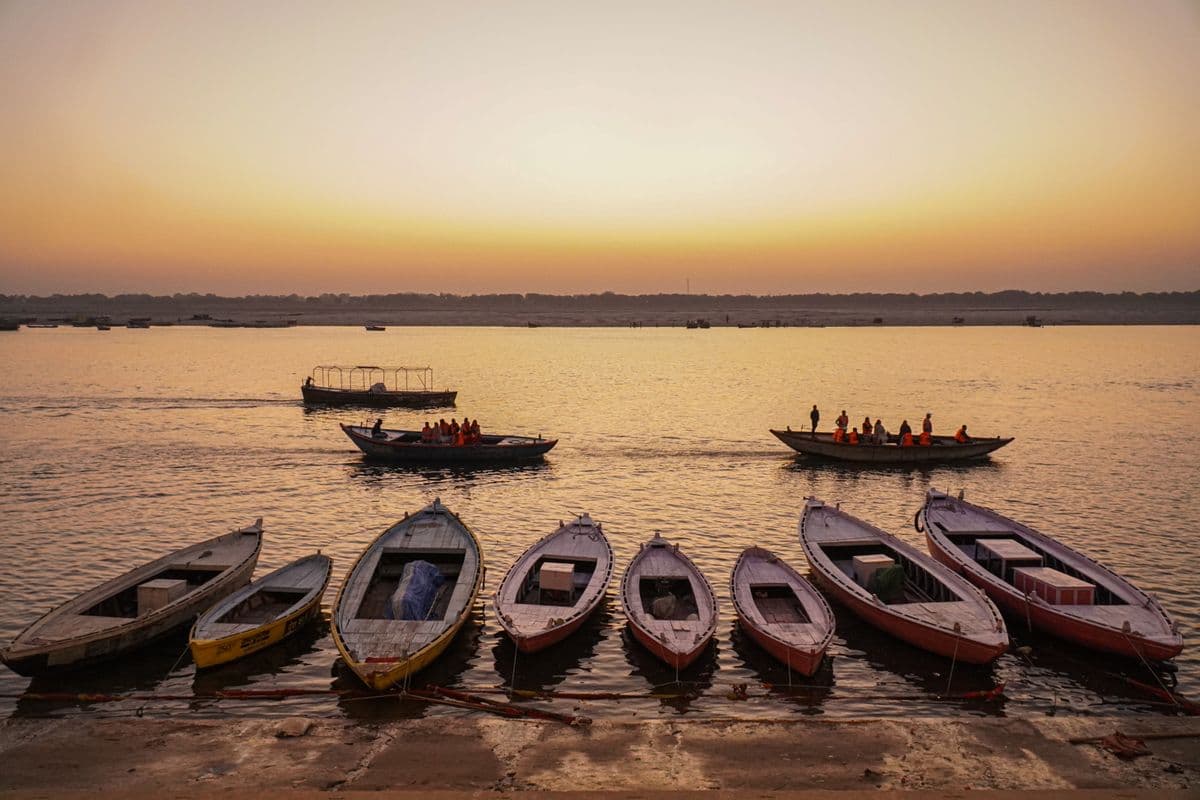
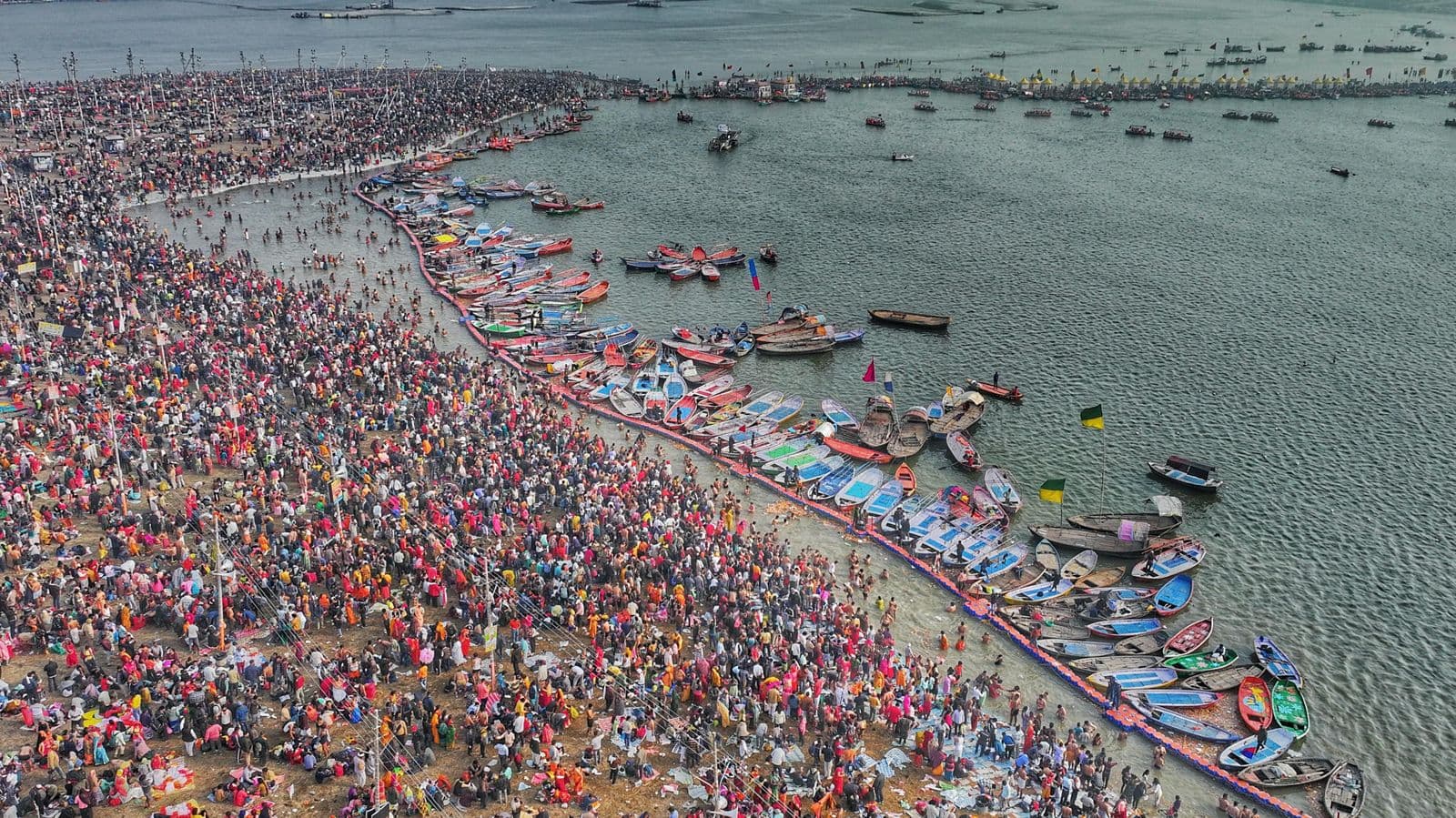
A boat moored off Dashashwamedh gives you a front-on view of all the platforms without the squeeze on the steps. Rowing and motor boats line up from late afternoon. Many people combine a short ride along the ghats to Manikarnika with the aarti.
- Agree the price and the duration before you board.
- Ask for life jackets and wear them.
- Boats tie up side by side, so the earlier you arrive, the closer you are to the front.
- During monsoon floods, usually July to September, boat services can be suspended and the aarti moves to higher steps or rooftops.
Best places to watch from the ghat
- The steps facing the platforms fill first. Come early and bring something to sit on.
- Rooftop cafés and guesthouse terraces overlooking the ghat give a good elevated view. Some charge a fee or have a minimum order.
- The aarti is free to watch. You don't need to pay anyone for a place on the steps.
Special days: Dev Deepawali and more
On Dev Deepawali, the full moon of Kartik (usually November), the ghats are lit with lakhs of diyas and the aarti is at its grandest. Ganga Dussehra, around May or June, and Maha Shivratri are also big occasions. On these dates, hotels and boats book out months ahead, and the crowds are intense. See our pilgrimage calendar for the seasons.
Practical tips
- Keep phones and wallets secure, because pickpockets work the crowds.
- Photography is allowed, but be respectful. Don't push forward or use bright lights in the priests' faces.
- Dress modestly. You're at a living place of worship.
- Phones are not allowed inside the Kashi Vishwanath temple. Use the lockers, or leave valuables at the hotel.
- Monkeys and narrow, crowded lanes make bags with zips a good idea.
A one-day plan for Varanasi
- Before dawn: a boat ride along the ghats as the sun comes up.
- Early morning: Subah-e-Banaras at Assi Ghat.
- Mid-morning: breakfast, then darshan at Kashi Vishwanath through the new corridor.
- Afternoon: Sarnath, about 10 km away, where the Buddha gave his first sermon.
- Evening: the Ganga Aarti at Dashashwamedh, from a boat or the steps.
Our Varanasi, Sarnath & Prayagraj tour includes a sunrise boat ride and the evening aarti from the river. For more on the city, read the Varanasi travel guide.
Frequently asked questions
What time is the Ganga Aarti in Varanasi?
The evening aarti at Dashashwamedh Ghat starts around sunset, roughly 6:30–7 p.m. in summer and 5:30–6 p.m. in winter, and lasts about 45 minutes. The morning aarti at Assi Ghat is held before sunrise.
Which is better, Assi Ghat or Dashashwamedh?
Dashashwamedh's evening aarti is grander and more dramatic. Assi Ghat's morning aarti is quieter and more personal. If you have two days, see both.
Is there a fee to watch the Ganga Aarti?
No. The aarti is free. You pay only if you watch from a boat or a rooftop café.
Is the Ganga Aarti held during the monsoon?
Yes, it is held every day. When the river floods, usually between July and September, it moves to higher steps or rooftops, and boat services may be suspended.