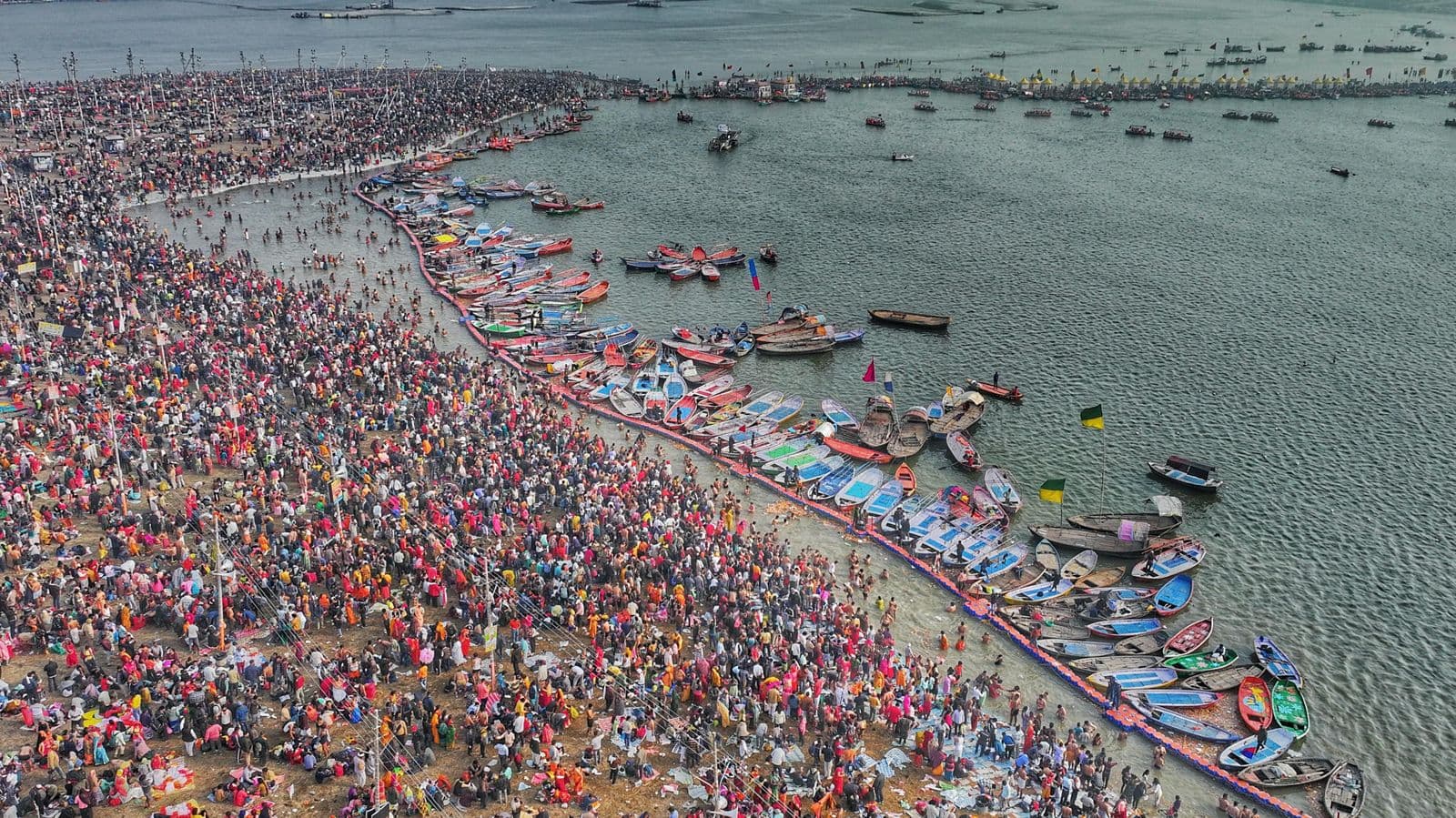
Once every twelve years, when Jupiter enters Leo (Simha), the Kumbh Mela comes to Nashik and Trimbakeshwar on the Godavari. The 2026–28 Simhastha opened with the flag-hoisting ceremony on 31 October 2026, and its main bathing days fall in August and September 2027.
Millions of pilgrims, sadhus and akharas are expected. This guide covers the key dates, where things happen and how to plan around the crowds.
Dates on this page follow the published schedule as of November 2026. Mela authorities can revise them, so confirm against official announcements before you book travel.
What is the Simhastha Kumbh?
The Kumbh Mela rotates between four river cities: Prayagraj, Haridwar, Ujjain and Nashik–Trimbakeshwar. The melas at Nashik and Ujjain are called Simhastha because they're held when Jupiter is in Leo. The last Nashik Simhastha was in 2015.
Nashik's Kumbh is unusual because it is split between two sites about 30 km apart. The Vaishnava akharas bathe at Ramkund on the Godavari in Nashik city. The Shaiva akharas bathe at Kushavarta tirth in Trimbakeshwar, near the source of the Godavari and beside the Trimbakeshwar Jyotirlinga.
Key dates
| Date | Occasion | Where |
|---|---|---|
| 31 Oct 2026 | Dhwajarohan (flag hoisting): the mela begins | Nashik & Trimbakeshwar |
| 2 Aug 2027 | First amrit snan | Nashik & Trimbakeshwar |
| 31 Aug 2027 | Second amrit snan | Nashik & Trimbakeshwar |
| 11 Sep 2027 | Third amrit snan | Ramkund, Nashik |
| 12 Sep 2027 | Third amrit snan | Kushavarta, Trimbakeshwar |
| Jul 2028 | Flags lowered: the mela closes | Nashik & Trimbakeshwar |
Ordinary pilgrims can bathe on any day of the mela. On the amrit snan days, the akharas process to the river in great columns. These are the most spectacular days and by far the most crowded. Access roads close and you may have to walk several kilometres to reach the ghats.
Should you go on a bathing day?
If you want to see the akhara processions, plan around one amrit snan, book your hotel as early as possible and be ready for long walks and long waits. If you'd rather bathe peacefully, go on an ordinary day in between. The camps, discourses and mela atmosphere continue, without the crush.
August and September are monsoon months in Nashik. Expect rain, a full Godavari and slippery ghats. Pack light rain gear and footwear that grips when wet.
Where to go in Nashik and Trimbakeshwar
- Ramkund and Panchavati: the main bathing ghat in Nashik, with the Kalaram temple and Sita Gufa nearby. The area is linked to the Ramayana; see our Ramayana trail.
- Trimbakeshwar temple: one of the twelve Jyotirlingas, with Kushavarta tirth in the town.
- Brahmagiri hill: above Trimbakeshwar, traditionally the source of the Godavari. It is a steep climb on stone steps.
- Saptashrungi: a hill shrine of the goddess, about 60 km from Nashik.
- Shirdi: about 90 km away, so it is easy to add before or after. See our Shirdi guide.
Where to stay
Hotels in Nashik and Trimbakeshwar sell out early for the amrit snan dates, and prices rise sharply. There are three main options:
- Nashik city hotels, which have the most choice. Book months ahead for the bathing days.
- Tent cities set up for the mela, usually announced by the state closer to the event.
- A base in Igatpuri or Shirdi, driving in on quieter days.
Getting there
- By air: Nashik's Ozar airport has limited flights. Mumbai, about 170 km away, is the main gateway, and Pune is about 210 km away.
- By rail: Nashik Road is the main station. Special trains usually run during the mela.
- By road: expect traffic restrictions, diversions and park-and-ride arrangements on the main bathing days.
Crowd safety tips
- Agree a meeting point with your group before entering the mela area, in case you get separated.
- Give every traveller, especially children and elders, a card with their name, the hotel and a phone number in Hindi or Marathi as well as English.
- Avoid the busiest ghats at peak hours on bathing days, and follow police and volunteer instructions.
- Bathe only in designated areas, and hold on to someone in the current.
- Carry little: ID, some cash in small notes, medicines and a phone in a waterproof pouch.
Combine the Kumbh with Trimbakeshwar, Grishneshwar and Bhimashankar on a Maharashtra leg of the 12 Jyotirlinga yatra, or plan a custom Kumbh trip with us.
Frequently asked questions
When is the Nashik Kumbh Mela 2027?
The Nashik–Trimbakeshwar Simhastha formally began with the flag hoisting on 31 October 2026 and runs until July 2028. The main amrit snan bathing days are scheduled for 2 August, 31 August and 11–12 September 2027.
What are the amrit snan dates?
2 August 2027 and 31 August 2027 at both Nashik and Trimbakeshwar. The third falls on 11 September 2027 at Ramkund, Nashik, and 12 September 2027 at Kushavarta, Trimbakeshwar. Confirm with official announcements before you travel.
Should I go to Nashik or Trimbakeshwar?
Both if you can. Ramkund in Nashik is where the Vaishnava akharas bathe, and Kushavarta in Trimbakeshwar is where the Shaiva akharas bathe, next to the Jyotirlinga temple. They are about 30 km apart.
How far is Trimbakeshwar from Nashik?
About 30 km, normally under an hour by road. On bathing days, road closures can make it much longer, so plan to stay at one site per day.