Help centre
Pilgrimage tour FAQs
Everything travellers ask us before booking a spiritual tour in India — seasons, registrations, fitness, food and how our trips work.
General questions
What is a spiritual tour, and how is it different from a regular holiday?
A spiritual tour is planned around temple visits, rituals and festivals rather than general sightseeing. The itinerary is timed to aartis, temple opening hours and auspicious days; guides explain the history and significance of each site; and the pace leaves time for puja and rest. We can also arrange family rituals such as pind daan at Gaya or Badrinath through local priests.
When is the best time for the Char Dham Yatra?
The four shrines open around Akshaya Tritiya (late April or May) and close around Diwali and Bhai Dooj (October or November). May–June is the busiest window; mid-September to October is quieter, with clearer mountain views after the monsoon. We avoid peak monsoon (July–August) because of landslide risk on Himalayan roads.
See the Char Dham YatraIs registration required for the Char Dham and Kedarnath yatra?
Yes. The Uttarakhand government requires every pilgrim to register for the Char Dham Yatra. We complete registration on your behalf, and also book helicopter tickets, ponies or palkis where you choose them — helicopter seats in particular sell out quickly, so we plan these months ahead.
Read the Kedarnath guideAre your pilgrimage tours suitable for senior citizens?
Yes — a large share of our pilgrims are travelling with, or are, parents and grandparents. We build in rest days for altitude, keep road days shorter, choose hotels close to the shrines, and arrange pony, palki or helicopter options for steep sections. A pre-departure medical check is recommended for any Himalayan yatra.
Planning for eldersCan you arrange special pujas and darshan at the temples?
We arrange pujas, abhishekam and rituals through temple trusts and local priests wherever the temple allows advance booking, and we time visits so you are in the shrine for the aartis that matter most. Booking rules differ by temple and season, so we confirm what is possible when we plan your itinerary.
What food is served on the yatra?
Pure vegetarian, sattvic meals throughout, with no-onion, no-garlic and Jain food available on request. In the mountains we favour simple, warm, freshly cooked food that is easy on the body at altitude.
Do you offer private and customised pilgrimage tours?
Every itinerary on this site can be run as a private yatra for a family or a community group, and we regularly combine circuits — Kashi with Ayodhya, or the Do Dham with Rishikesh. Tell us your dates, who is travelling and what you hope to experience, and we will design the route around you.
Plan a private yatraWhat documents are needed for the Kailash Mansarovar Yatra?
Kailash lies in Tibet, so Indian pilgrims need a passport valid for at least six months along with the permits required for the route, and a medical fitness clearance. Permit rules and route availability are set by the authorities and can change year to year; we confirm the current requirements before accepting any booking.
See the Kailash yatraChar Dham Yatra
View tourCan senior citizens do the Char Dham Yatra?
Yes. We add buffer time, choose hotels near the shrines and arrange ponies, palkis or helicopter seats for the steep sections. Tell us about any health conditions when you enquire so we can plan the pace.
Can I do Kedarnath by helicopter?
Yes — helicopter services operate from Phata, Sersi and Guptkashi in season. Seats are limited and sell out quickly, so we recommend booking as early as possible.
What is the best month for the Char Dham Yatra?
May–June is the busiest. Mid-September to October is quieter, with clear post-monsoon views.
Kedarnath & Badrinath (Do Dham)
View tourHow long is the Kedarnath trek?
About 16 km each way from Gaurikund. Most people take 6–8 hours to walk up.
Can this be done in five days?
With a Kedarnath helicopter booking, yes — we can tighten the itinerary to five days.
Varanasi, Sarnath & Prayagraj
View tourIs the Ganga Aarti better from the ghat or a boat?
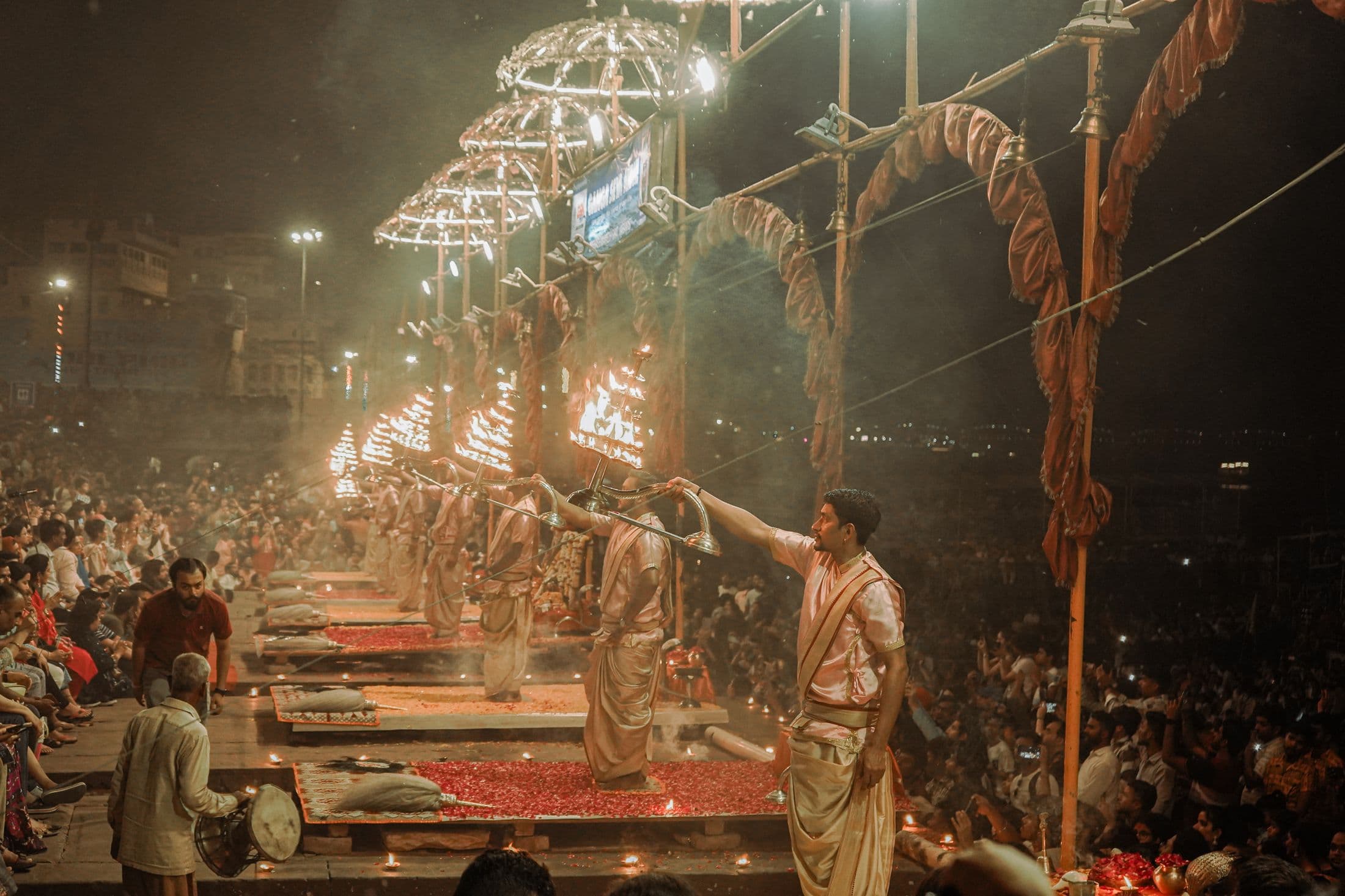
A boat gives an unobstructed view without the crush of the crowd — we include one for that reason.
Can you add Ayodhya?
Yes. Ayodhya is about 200 km from Varanasi; we can add two days for Ram Mandir and the Saryu ghats.
Kailash Mansarovar Yatra
View tourHow difficult is the Kailash parikrama?
It is the most physically demanding trip we run — about 52 km over three days at high altitude. Ponies and porters can be hired, but good fitness is essential.
Is there an age limit?
Permit rules can include age and medical criteria, which change year to year. We confirm the current rules before accepting a booking.
12 Jyotirlinga Tour
View tourCan I do just a few Jyotirlingas?
Yes — most travellers start with a regional leg, such as Ujjain and Omkareshwar in three days.
Can the Bhasma Aarti at Ujjain be booked?
It requires advance booking through the temple, subject to availability. We apply on your behalf where possible.
Buddhist Circuit Tour
View tourCan you add Shravasti?
Yes — Shravasti adds one day between Lumbini and Lucknow.
Is this suitable for non-Buddhists?
Absolutely. The sites are rich in history and architecture, and many of our guests come for that alone.
Mathura & Vrindavan Tour
View tourCan I do Govardhan parikrama on foot?
Yes. The full parikrama is about 21 km; we'll arrange the drop and pickup and adjust the day accordingly.
Is Holi in Braj safe for families?
It's joyful but very crowded. We plan viewing points and timings carefully and keep groups together with a local guide.
Madurai, Rameswaram & Kanyakumari
View tourCan you add Tirupati?
Yes — Tirupati can be added at the start via Chennai, with darshan tickets booked in advance where available.
Is the Meenakshi temple open all day?
It closes for a few hours in the afternoon. We schedule visits for the morning and the evening ceremony.
Vaishno Devi Yatra
View tourHow long is the Vaishno Devi trek?
About 13 km each way from Katra to the Bhawan, plus around 2 km more to Bhairon temple, which a ropeway also serves. Most people take 5–7 hours to walk up.
What is the best time for Vaishno Devi?
March to June and September to December. July and August bring monsoon rain and slippery paths, and in January and February the nights are very cold with occasional snow.
Can senior citizens do the Vaishno Devi yatra?
Yes. Ponies, palkis and battery cars cover parts of the route, and the helicopter cuts the trek to the last 2.5 km. Allow a rest day afterwards, as this itinerary does.
Amarnath Yatra
View tourWhich route is better for Amarnath, Baltal or Pahalgam?
Baltal is shorter, about 14 km each way, and can be done in a day, but it is steep. The Pahalgam route is longer, about 3 days on foot via Chandanwari, Sheshnag and Panchtarni, and more gradual. This tour uses Baltal, and we can plan Pahalgam on request.
When is the Amarnath Yatra in 2027?
The Shrine Board announces the dates each year, usually in spring. The yatra generally runs from around early July to Raksha Bandhan in August.
Is a medical certificate required?
Yes. Every pilgrim needs a Compulsory Health Certificate from a doctor or hospital authorised by the Shrine Board, issued within the required window before registration.
Amritsar & Golden Temple
View tourHow many days are enough for Amritsar?
Two days covers the Golden Temple, Jallianwala Bagh and Wagah. A third day adds Tarn Taran Sahib and gives time to see the Golden Temple at both night and dawn.
What time is the Palki Sahib ceremony?
It is held twice a day: late at night, when the Guru Granth Sahib is carried to rest, and before dawn, when it returns to the sanctum. Timings shift with the seasons, and we plan around them.
Can non-Sikhs visit the Golden Temple?
Yes. Everyone is welcome, whatever their faith. Cover your head, remove your shoes and avoid tobacco and alcohol.
Rishikesh & Haridwar
View tourHow many days are enough for Haridwar and Rishikesh?
Two days covers the aartis and main temples. Three days, as on this tour, allows a relaxed pace with time for yoga, rafting or the ashrams.
Which Ganga Aarti is better, Haridwar or Rishikesh?
Har Ki Pauri in Haridwar is grand and crowded. Parmarth Niketan in Rishikesh is smaller and more musical. Seeing both is worth it.
Is this tour suitable for senior citizens?
Yes. The towns are flat, the ropeways remove the steep climbs, and the drives are short once you're out of Delhi.
Ayodhya, Prayagraj & Chitrakoot
View tourHow many days are enough for Ayodhya?
Two days covers the Ram Mandir, Hanuman Garhi, Kanak Bhawan and the Saryu aarti at a comfortable pace. This tour adds Prayagraj and Chitrakoot for a five-day Ramayana trip.
What is the best time to visit Ayodhya?
October to March. Summers are very hot. Deepotsav at Diwali and Ram Navami are the most special and the most crowded times.
Can we add Varanasi?
Yes. Varanasi is about 4 hours from Ayodhya and a little less from Prayagraj. Add two days for the ghats, Kashi Vishwanath and the Ganga Aarti.
Puri, Konark & Bhubaneswar
View tourWhen is the Puri Rath Yatra?
It is held in the month of Ashadha, usually in June or July. The date follows the Hindu calendar, so check the year's date before you plan.
How many days are enough for Puri?
Two days covers the Jagannath temple and Konark. Three to four days, as on this tour, adds Bhubaneswar and Raghurajpur at a relaxed pace.
Can non-Hindus visit the Jagannath temple?
Not inside. Visitors can see the temple's spire and gates from outside, and from nearby rooftops and viewing points.
Planning a pilgrimage for your family?
Share your dates and who’s travelling. A travel planner will send a day-by-day itinerary and an all-inclusive quote within 24 hours — no obligation.